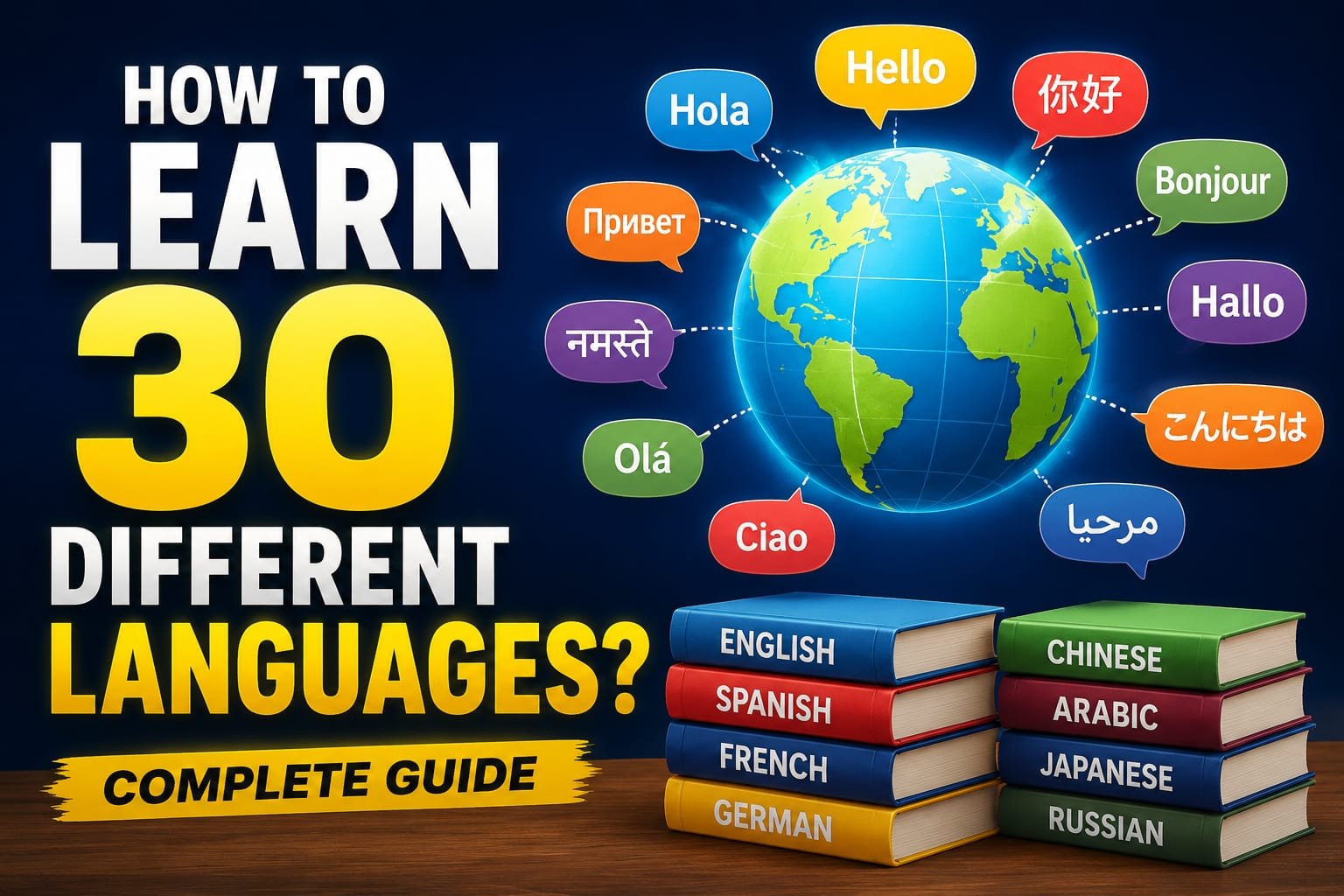
Learning one new language is an exciting challenge. Learning 30 different languages may sound impossible, but with the right strategy, patience, and consistency, it can become a realistic long-term goal. Many famous polyglots around the world speak 10, 20, or even 40 languages by following effective learning systems instead of relying on natural talent alone.
In this guide, you’ll discover practical methods to learn multiple languages efficiently without feeling overwhelmed.
Is It Really Possible to Learn 30 Languages?
Yes—but it depends on what you mean by learn.
Fluency exists on a spectrum. You may become conversational in some languages, professionally fluent in others, and maintain basic communication skills in the rest. The key is setting realistic expectations.
Many multilingual speakers spend years gradually adding new languages while regularly reviewing the ones they’ve already learned.
Why Do People Learn Multiple Languages?
Learning several languages offers many personal and professional benefits.
Some of the biggest advantages include:
- Better career opportunities
- Easier international travel
- Improved communication with people worldwide
- Stronger memory and problem-solving skills
- Access to different cultures, books, movies, and traditions
- Increased confidence and personal growth
Every new language opens the door to millions of new conversations.
Build a Long-Term Language Learning Plan
Trying to study 30 languages at the same time is not effective.
Instead, follow a step-by-step roadmap.
Phase 1: Learn One Language Well
Start with a language that interests you most.
Focus on:
- Basic grammar
- Common vocabulary
- Everyday conversations
- Listening practice
- Reading simple texts
Build a solid foundation before moving to another language.
Phase 2: Add Related Languages
Learning related languages becomes easier because they often share vocabulary and grammar.
Examples include:
- Spanish ? Portuguese ? Italian
- German ? Dutch
- Hindi ? Urdu
- Malay ? Indonesian
This approach reduces learning time significantly.
Use the Right Learning Resources
Successful language learners combine multiple resources instead of relying on one app.
Helpful tools include:
- Language learning apps
- Online courses
- Podcasts
- YouTube lessons
- Flashcards
- Audiobooks
- Children’s books
- Language exchange communities
Using different resources keeps learning interesting and improves every language skill.
Learn Vocabulary Smarter
Instead of memorizing random word lists, learn words in context.
For example:
Instead of learning:
- Apple
- Eat
- Morning
Learn:
I eat an apple every morning.
This improves memory and helps you use vocabulary naturally.
Practice Speaking Every Day
Speaking is one of the fastest ways to improve.
Even if you don’t have a language partner, you can:
- Talk to yourself
- Read aloud
- Record your voice
- Shadow native speakers
- Join online conversation groups
Making mistakes is part of the learning process.
Create a Daily Study Routine
Consistency beats long study sessions.
A simple daily schedule could be:
Morning (20 Minutes)
- Review vocabulary
- Practice flashcards
Afternoon (20 Minutes)
- Watch a lesson
- Learn grammar
Evening (20 Minutes)
- Listen to podcasts
- Practice speaking
Studying one hour every day for years produces far better results than studying several hours once a week.
Avoid Mixing Languages
One challenge multilingual learners face is language interference.
To reduce confusion:
- Study different languages at different times.
- Use separate notebooks.
- Change your phone language occasionally.
- Associate each language with specific topics or activities.
These habits help your brain organize information more effectively.
Use Memory Techniques
Polyglots often rely on memory strategies instead of repetition alone.
Popular techniques include:
Spaced Repetition
Review words just before you’re about to forget them.
Mnemonics
Create funny or memorable mental images to remember vocabulary.
Memory Palace
Associate words with familiar places in your home or neighborhood.
These methods improve long-term retention.
Immerse Yourself in the Language
Surround yourself with your target language every day.
Ideas include:
- Watching movies
- Listening to music
- Reading news
- Following social media creators
- Changing device settings
- Thinking in the language
Immersion makes learning feel natural rather than forced.
Track Your Progress
Keeping track of your achievements helps maintain motivation.
You can record:
- New words learned
- Hours studied
- Books completed
- Videos watched
- Conversations held
- Language proficiency levels
Small milestones build confidence over time.
Stay Motivated During the Journey
Learning 30 languages is a marathon, not a sprint.
Keep yourself motivated by:
- Celebrating small wins
- Setting monthly goals
- Traveling when possible
- Meeting native speakers
- Watching your favorite shows without subtitles
- Reading books you enjoy
Remember that progress is more important than perfection.
Common Mistakes to Avoid
Many learners slow their progress by making avoidable mistakes.
Avoid these habits:
- Trying to learn too many languages at once
- Memorizing grammar without speaking
- Giving up after a few weeks
- Comparing yourself with experienced polyglots
- Ignoring listening practice
- Studying without a consistent schedule
Consistency is the biggest predictor of success.
Conclusion
Learning 30 different languages is an ambitious but achievable lifelong goal. Instead of rushing, focus on mastering one language at a time, building consistent daily habits, and using effective learning techniques like spaced repetition, immersion, and regular speaking practice. Over the years, your language skills will continue to grow, opening doors to new cultures, friendships, and career opportunities. The journey may take time, but every new language you learn is a valuable investment in yourself.