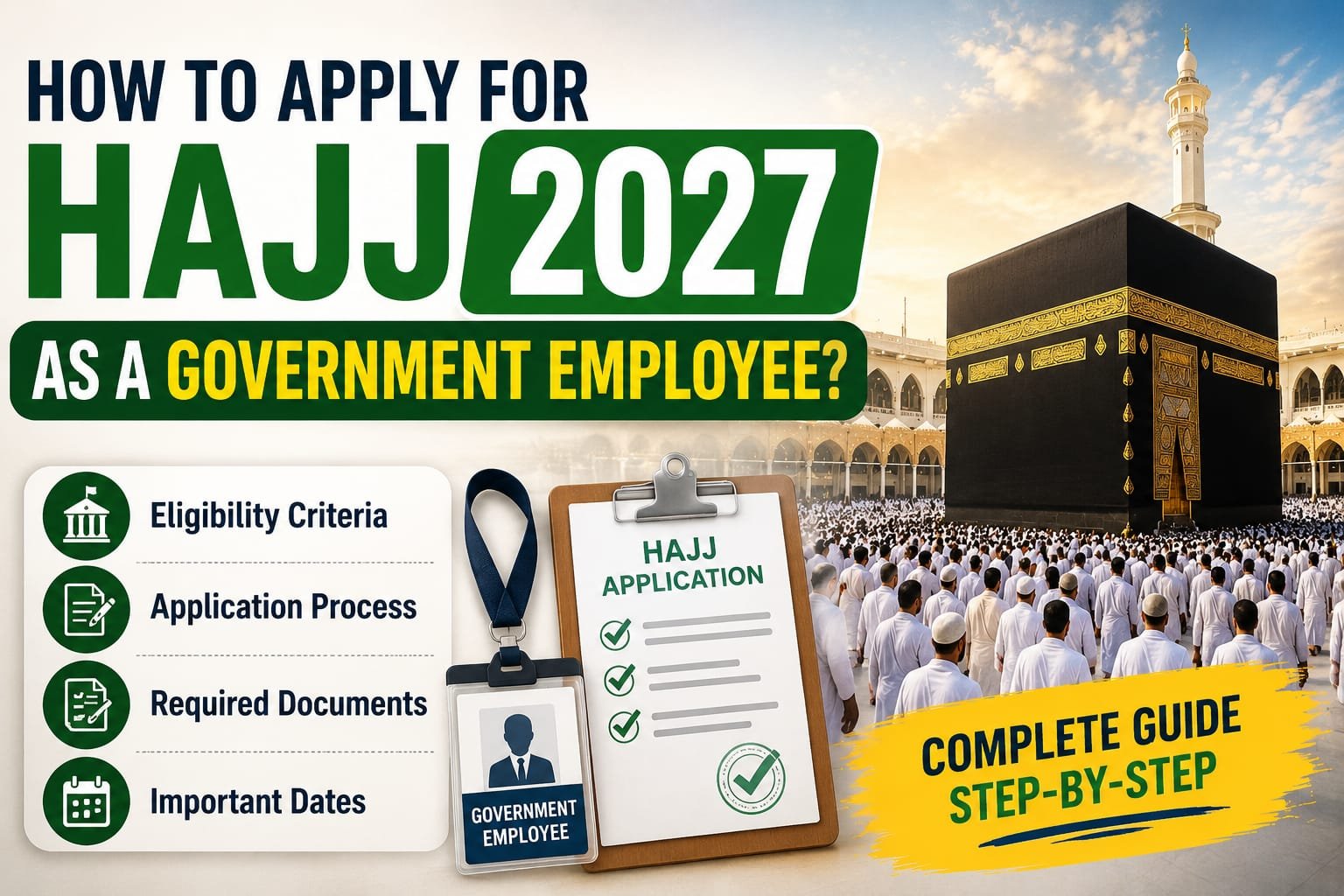
For many Pakistani government employees, performing Hajj is a lifelong dream. With Pakistan’s new Hajj Policy & Plan 2027–2030, the application process has become more digital and introduces a multi-year registration and waiting-list system.
If you are a government employee and want to perform Hajj 2027, it is important to understand that simply being employed by the government does not automatically guarantee a Hajj seat. You generally need to register under the applicable Hajj scheme and fulfill the requirements announced by the Ministry of Religious Affairs and Interfaith Harmony.
Is There a Special Hajj Scheme for Government Employees?
Government employees can apply under the Government Hajj Scheme, just like other eligible Pakistani citizens. The 2027–2030 policy provides a Government Hajj Scheme alongside the Private Hajj Scheme. For 2027, the government scheme is allocated 60% of the overall quota, while 40% is allocated to the private scheme, subject to the policy and annual Saudi quota.
However, some public-sector workers may qualify for specific reserved categories when such quotas are announced. These should not be confused with the normal Government Hajj Scheme.
Hajj 2027 Registration for Government Employees
The Ministry has already started Hajj 2027 registration, with the official registration system available through the Ministry’s Hajj Management System.
The new policy introduces multi-year Hajj registration. Applicants can indicate the year in which they intend to perform Hajj. Those who deposit 10% of the estimated Hajj cost after registration can move from the registration list to the waiting list and receive priority when applications for their selected year open.
Step-by-Step Application Process
1. Visit the official Hajj Management System
Start your registration through the Government of Pakistan’s Ministry of Religious Affairs Hajj Management System:
Official Hajj Management System
2. Create your account
Provide the required personal information and create your account according to the instructions displayed on the portal.
3. Enter your identity and passport details
You should have your valid Pakistani CNIC and passport information available. The 2027–2030 policy requires applicants to be Pakistani nationals with a valid Pakistani passport at the time of application.
4. Select your intended Hajj year
Under the new multi-year system, applicants can choose the year they intend to perform Hajj. This is an important change from earlier application systems.
5. Deposit the required amount
Applicants who want to move to the waiting list can deposit 10% of the estimated Hajj cost after registration. The Ministry will announce the applicable payment schedule and Hajj dues for each season.
6. Complete the required formalities
Keep your documents, medical information and payment records ready. Additional instructions may be issued by the Ministry before the 2027 Hajj season.
What Documents Should Government Employees Keep Ready?
Although the exact document checklist can be updated for Hajj 2027, applicants should generally prepare:
- Valid Pakistani CNIC
- Valid Pakistani passport
- Recent photographs, if required
- Medical/health certificate according to Ministry instructions
- Bank/payment receipt
- Relevant family or Mahram documents where applicable
- Departmental leave or permission documents, if required by the employee’s department
The Hajj policy states that pilgrims must satisfy Saudi health requirements and provide evidence of health fitness through a medical certificate from a registered medical practitioner in Pakistan.
Do Government Employees Need Departmental Permission?
Being selected for Hajj does not automatically replace your department’s normal leave or administrative requirements. Government employees should contact their HR branch, administration section or competent authority about Hajj leave and any required No Objection Certificate or departmental permission.
It is best to complete these formalities well before the departure date rather than waiting until the final stage.
How Are Hajj Applicants Selected?
One of the major changes in the 2027 policy is the introduction of a first-come, first-served approach from the waiting list and new applications. Applicants who are not selected because the quota is exhausted can remain in the queue and receive preference in subsequent Hajj seasons, according to the policy.
Therefore, early registration can be particularly important for anyone planning Hajj in a future year.
Important Tips for Government Employees
Before submitting your Hajj application, make sure your passport is valid, your CNIC information is accurate and your personal details match your official documents.
Also, use only official government channels for registration and payments. The 2027–2030 policy states that Hajj dues must be deposited through designated banking channels and that informal or cash payments are not accepted.
Keep screenshots, receipts and application information safely stored for future reference.
Final Takeaway
Applying for Hajj 2027 as a government employee in Pakistan is not necessarily a separate process simply because you work for the government. Your main route is to register through the official Hajj system and meet the eligibility, documentation, payment and departmental requirements.
The biggest change for Hajj 2027 is the multi-year registration and waiting-list system, which gives intending pilgrims more flexibility when planning their pilgrimage. Always check the latest announcements from the Ministry of Religious Affairs and Interfaith Harmony before making any payment or relying on a specific deadline, package price or departmental procedure.