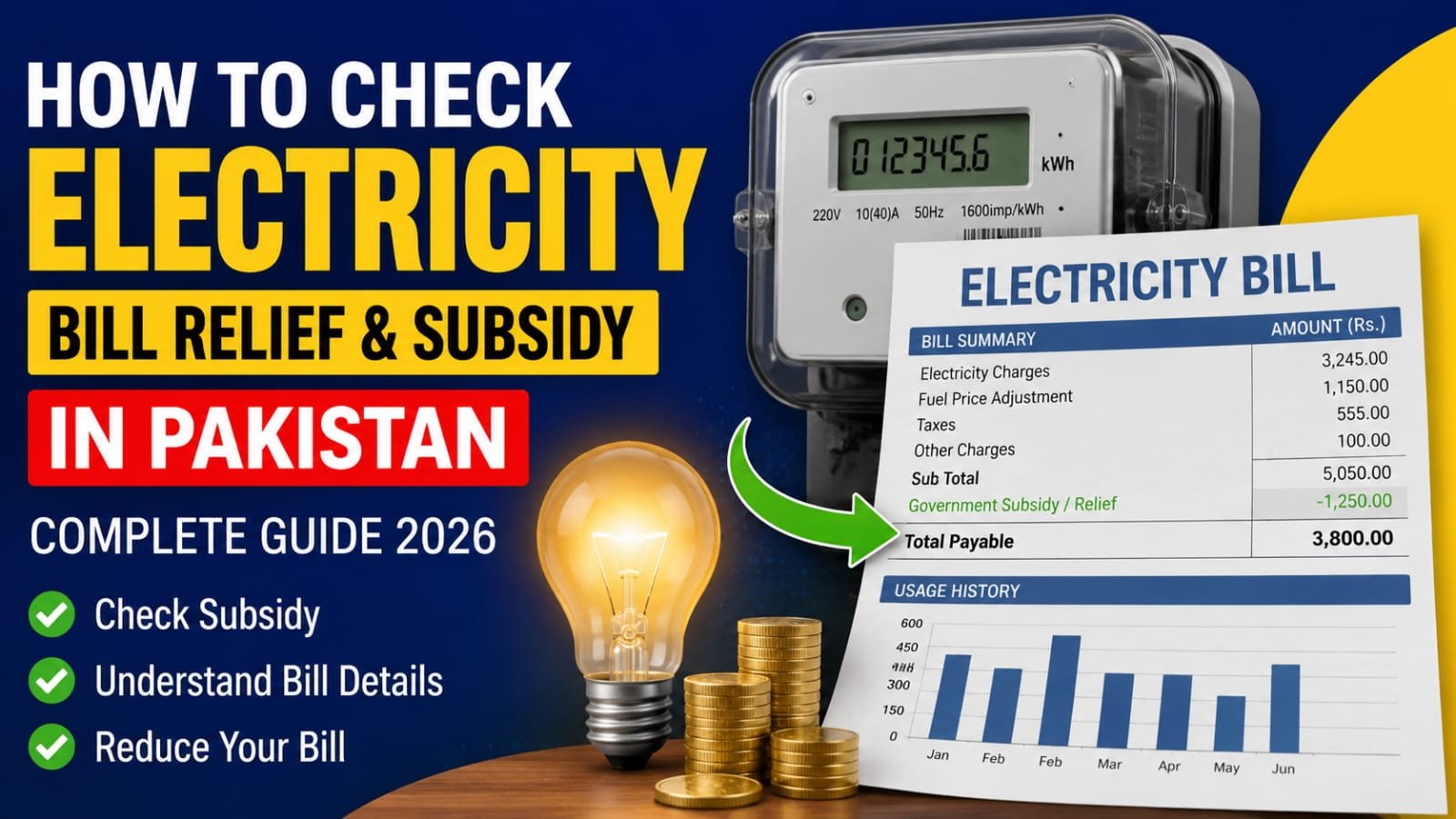
Electricity bills in Pakistan continue to rise every year, making government relief and subsidy programs extremely important for millions of households. Whether you are a WAPDA consumer or a K Electric user, knowing how to check your electricity bill subsidy can help you understand exactly how much relief you are receiving from the government.
In 2026, many Pakistani consumers are still confused about where subsidies appear on the bill, who qualifies for relief, and how to verify if the discount has been applied correctly. The good news is that checking your electricity bill relief is actually simple once you know what to look for.
This complete guide explains everything step by step in an easy and practical way.
What Is Electricity Bill Relief or Subsidy in Pakistan?
Electricity subsidy is financial support provided by the Government of Pakistan to reduce the burden of electricity costs for domestic consumers. The relief may come in different forms, including:
- Reduced per-unit electricity rates
- Monthly relief packages
- Protected consumer discounts
- Seasonal subsidy programs
- Fuel adjustment relief
- Special Ramadan or winter relief schemes
These subsidies are usually applied automatically to eligible consumers through electricity distribution companies such as:
- PESCO
- LESCO
- FESCO
- GEPCO
- IESCO
- MEPCO
- HESCO
- K-Electric
Who Qualifies for Electricity Subsidy in 2026?
Not every consumer receives the same level of relief. The amount depends on your electricity usage category.
Protected Consumers
Protected consumers usually receive the highest subsidy. You may qualify if:
- Your monthly electricity usage stays within the government limit
- You are a residential consumer
- Your previous months’ consumption remains low
Protected consumers often get lower unit rates compared to regular users.
Non Protected Consumers
If your electricity usage exceeds the protected category limit, you may move into the non-protected category. In this case:
- Unit prices become higher
- Subsidy amount decreases
- Additional taxes may apply
That is why managing electricity consumption is important for maintaining relief benefits.
How to Check Electricity Bill Subsidy
Checking your subsidy is very easy if you know where to look on your bill.
Step 1: Find the Subsidy Section on Your Bill
Most electricity bills in Pakistan contain a separate section showing:
- Government subsidy
- Tariff differential subsidy
- Relief amount
- Fuel price adjustment
- Quarterly adjustment
Look carefully near the bill calculation area.
Common labels include:
- Subsidy
- Govt Relief
- Tariff Subsidy
- PM Relief Package
The amount is usually deducted from your total payable bill.
Step 2: Compare Units and Tariff
Check these details carefully:
| Bill Detail | What to Check |
|---|---|
| Units Consumed | Monthly electricity usage |
| Consumer Category | Protected or non-protected |
| Per Unit Rate | Applicable tariff |
| Subsidy Amount | Discount provided |
| Total Bill | Final payable amount |
If your subsidy is missing despite low usage, you may need to contact your electricity provider.
Step 3: Use Online Bill Checking Services
Most electricity companies now provide online bill checking systems.
You can visit your electricity company’s official website and enter:
- Reference number
- Consumer ID
- Customer number
After entering the details, your duplicate bill will appear online with subsidy information included.
How to Know If You Are a Protected Consumer
This is one of the most searched questions in Pakistan.
You can usually identify your category directly on the bill. Look for:
- Protected
- Non Protected
This information is generally printed near the tariff section.
Example
If your monthly usage remains around 100 200 units consistently, you may qualify as a protected consumer.
However, if your usage suddenly increases, your category can change automatically.
Why Subsidy Amount Changes Every Month
Many consumers get confused when subsidy amounts vary monthly. This happens due to several reasons:
Fuel Price Adjustments
Fuel costs change regularly, affecting electricity prices.
Seasonal Electricity Usage
Summer bills usually become higher because of fans, coolers, and air conditioners.
Government Policy Updates
The government may announce temporary relief packages or revise subsidy structures during the year.
Consumption Changes
Using more electricity can shift you into a higher tariff slab, reducing relief benefits.
Tips to Maintain Electricity Bill Relief
If you want to continue receiving maximum subsidy benefits, follow these practical tips:
Reduce Extra Electricity Usage
Turn off unnecessary appliances and use energy saving devices.
Avoid Crossing Protected Limits
Even a small increase in units may shift you into a higher tariff category.
Use LED Bulbs
LED lights consume much less electricity compared to traditional bulbs.
Monitor Monthly Consumption
Keep track of your units regularly instead of waiting for the bill to arrive.
Common Problems Consumers Face
Subsidy Not Showing on Bill
This may happen because:
- Your category changed
- Units exceeded the limit
- Billing error occurred
Contact your electricity provider for clarification.
Wrong Consumer Category
Sometimes protected consumers are mistakenly placed in the non-protected category. In such cases:
- Visit the nearest customer service center
- Carry previous bills
- Request bill verification
Final Thoughts
Electricity bill relief and subsidy programs in Pakistan can significantly reduce monthly expenses especially for low and middle income families. In 2026, understanding your bill details is more important than ever because tariff systems and subsidy structures continue to change.
The best approach is to regularly monitor your electricity usage, check your subsidy section carefully, and stay within protected consumer limits whenever possible. By doing so you can save money and avoid unnecessary billing surprises.