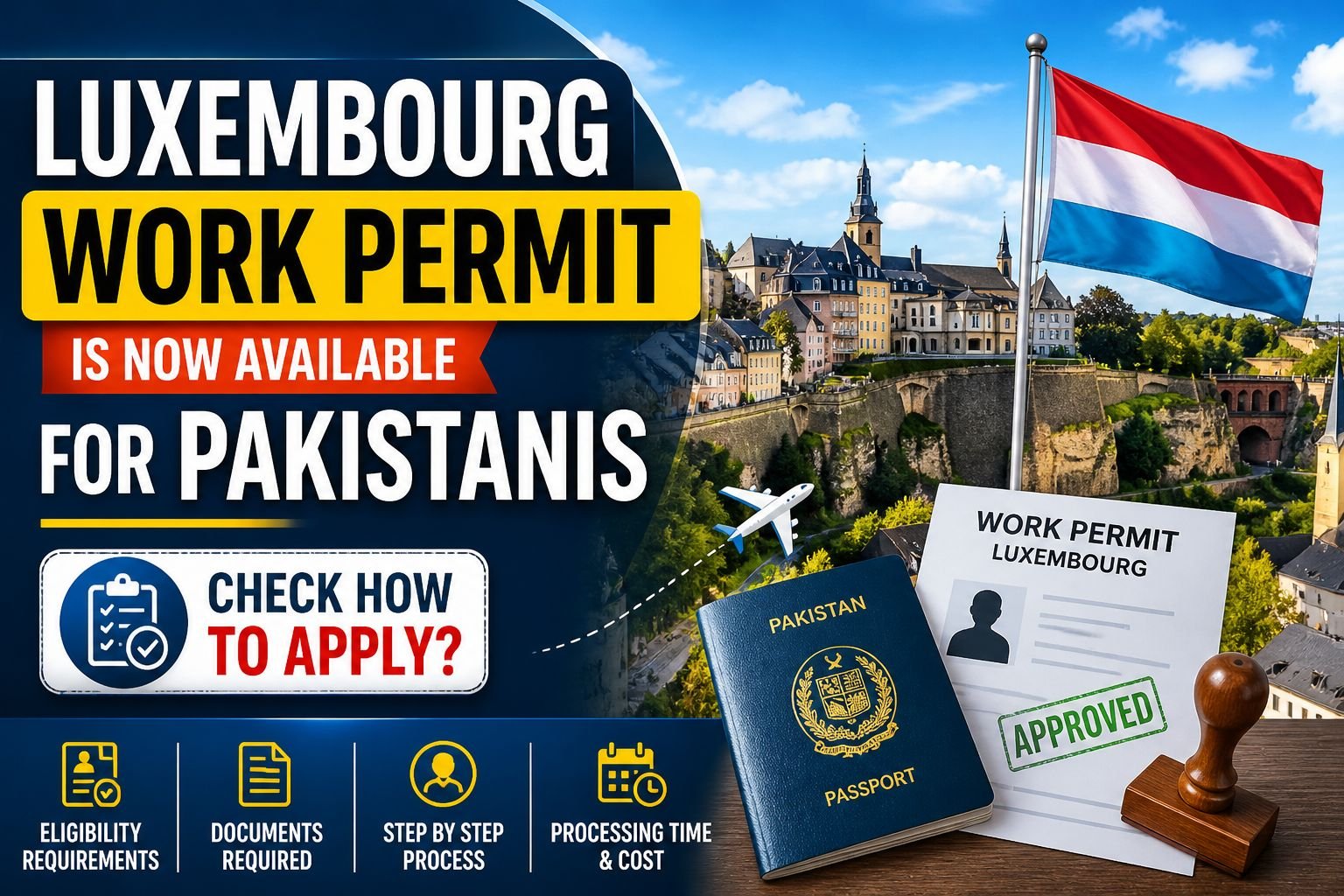
Dreaming of working in Europe with a high salary, strong economy, and excellent lifestyle? Good news opportunities in Luxembourg are opening up for skilled workers from Pakistan. Known for its financial strength and quality of life, Luxembourg is now becoming a top destination for international job seekers.
If you’re planning to apply for a Luxembourg work permit from Pakistan, this guide breaks down everything you need to know from eligibility to application steps.
Why Choose Luxembourg for Work?
Luxembourg may be small in size, but it’s one of the richest countries in the world. Located in the heart of Europe, it offers:
- High-paying jobs, especially in finance, IT, and construction
- Safe and peaceful environment
- Multilingual workplace (French, German, English)
- Access to the European Union job market
For Pakistani professionals, this means better career growth and global exposure.
Types of Luxembourg Work Permits
Before applying, it’s important to understand the main types of work permits available:
1. Short-Stay Visa (Type C)
- Valid for up to 90 days
- Suitable for business trips or temporary work
2. Long-Stay Visa (Type D)
- Required for employment longer than 90 days
- Most common option for Pakistani workers
3. EU Blue Card
- For highly skilled professionals
- Requires a job offer with a high salary threshold
Eligibility Criteria for Pakistanis
To apply for a Luxembourg work permit, you must meet these conditions:
- A valid job offer from a Luxembourg employer
- Relevant qualifications or experience
- Clean criminal record
- Valid passport
- Medical fitness
? Tip: Employers in Luxembourg must prove that no local or EU candidate is available before hiring from outside the EU.
Required Documents
Prepare these documents carefully to avoid delays:
- Valid passport (minimum 6 months validity)
- Job contract or offer letter
- Educational certificates
- CV/Resume
- Proof of accommodation in Luxembourg
- Medical certificate
- Police clearance certificate
Make sure all documents are translated into English, French, or German if required.
Step-by-Step Application Process
Step 1: Get a Job Offer
Search for jobs on Luxembourg job portals or international recruitment agencies. Focus on sectors like IT, finance, healthcare, and construction.
Step 2: Employer Applies for Work Authorization
Your employer in Luxembourg will initiate the process by applying for a work permit on your behalf.
Step 3: Apply for Long-Stay Visa (Type D)
Once approved, apply at the Luxembourg embassy in Pakistan with your documents.
Step 4: Travel to Luxembourg
After visa approval, travel to Luxembourg and register with local authorities.
Step 5: Apply for Residence Permit
Within a few days of arrival, apply for your residence permit to legally stay and work.
Processing Time and Fees
- Processing Time: 8–12 weeks (can vary)
- Visa Fee: Around €80–€100
- Residence Permit Fee: Additional charges may apply
? Always apply early to avoid delays, especially during peak seasons.
High-Demand Jobs in Luxembourg
Here are some in-demand fields for Pakistani workers:
- IT and Software Development
- Banking and Finance
- Engineering
- Healthcare
- Construction and Skilled Labor
These sectors offer competitive salaries and better chances of approval.
Practical Tips to Increase Approval Chances
- Apply through verified employers
- Keep your documents complete and error free
- Learn basic French or German (bonus advantage)
- Tailor your CV to European standards
- Avoid fake agents or scams
? Be cautious many people lose money due to fraudulent visa agents. Always verify sources.
Benefits of Working in Luxembourg
- High minimum wage (among the highest in Europe)
- Free movement within Schengen countries
- Excellent healthcare and social security
- Opportunity for permanent residency
Conclusion
Getting a Luxembourg work permit as a Pakistani is absolutely possible but it requires the right approach, proper documentation, and patience. With a strong job offer and careful preparation, you can unlock a life changing opportunity in one of Europe’s most prosperous countries.